
Producing a game with a small team is a unique and rewarding experience, one that truly tests and develops your skills as a game producer. I recently had the privilege of producing a game with two incredibly talented teammates, and we used Unity as our development platform. This journey taught me valuable lessons about communication, project management, and creative problem-solving—and I’d like to share some insights into our process and what I learned along the way.
Many games let you wield godlike powers, but embodying a small, revered deity from Chinese folklore brings an entirely different perspective. As the protector of a specific region, your strength comes not from cosmic forces but from the devotion of the people who believe in you. Every choice you make—whether to answer prayers, intervene in conflicts, or remain distant—shapes their faith and, in turn, your survival.
In this post, I’ll take you behind the scenes of how we developed and localized this game. You’ll discover the creative decisions, technical hurdles, and cultural nuances that shaped the experience.
The Concept Phase: Defining the Vision
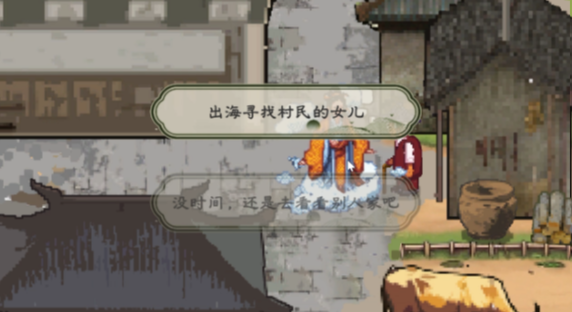
When developing our game, we started by identifying the target genre: a 2D top-down simulation-adventure hybrid. This foundation guided our approach to gameplay mechanics, where we designed engaging interaction loops and core objectives to keep players immersed. The heart of the game lies in its quests, with a well-crafted main storyline and a satisfying ending that encourages exploration and decision-making. To bring the world to life, we leaned into a pixel art aesthetic, ensuring all visual and audio elements aligned seamlessly with the game’s theme and genre. Our tools of choice included Unity for development, Procreate for creating custom assets, and AI-based tools to streamline asset generation. Together, these elements formed the backbone of our creative process, making the game a cohesive and enjoyable experience for players.
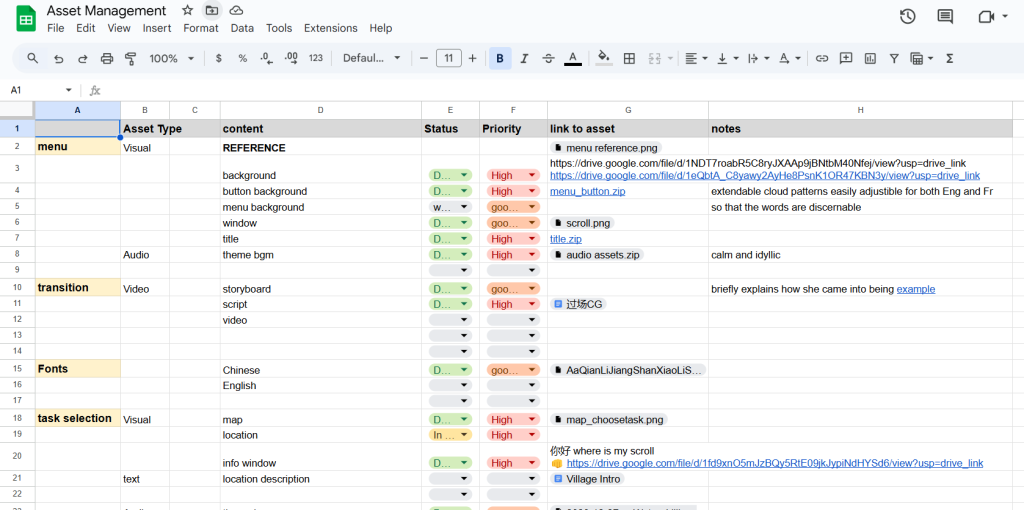
During this phase, we documented our ideas using tools like Miro for visual brainstorming and Google Docs/Excel for writing detailed game design documents. Unity’s flexibility helped us conceptualize early mechanics and experiment with prototypes quickly. We aimed to scope our project realistically, ensuring we wouldn’t overextend ourselves—a crucial decision for any small team.
Planning and Pre-Production: Setting the Foundation
With the concept locked in, we moved into pre-production. This phase involved creating a roadmap, identifying milestones, and establishing roles and responsibilities within the team. I took charge of building a project timeline in Excel, outlining weekly goals and deliverables. Since there were only three of us, clear role definitions were essential. One teammate focused on programming and technical implementation, the other specialized in art and design, while I bridged the gap between disciplines as the producer.
Development: Navigating Challenges and Iteration
Game development is rarely smooth sailing, and our project was no exception. As a producer, I was responsible for ensuring the team stayed on track while addressing challenges that arose. Communication was key. We held daily stand-up meetings to discuss progress, share blockers, and recalibrate priorities.
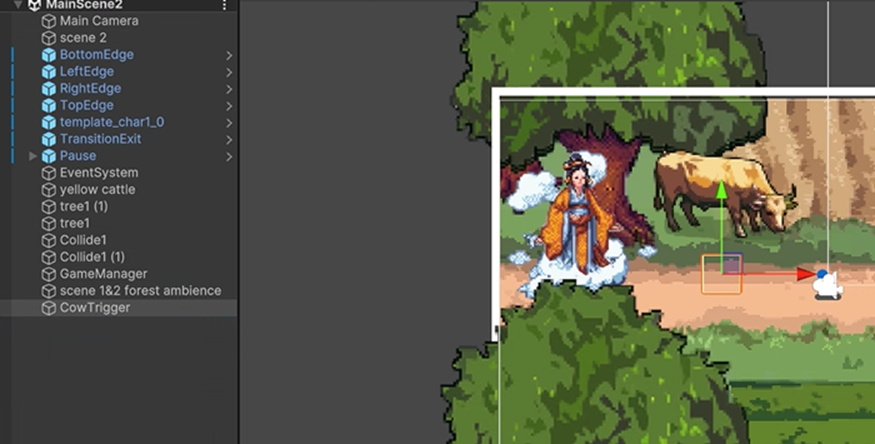
The development of our game’s structure focused on creating an immersive and seamless player experience. We started by implementing character movement using Unity’s RigidBody component, enabling physics-based interactions that felt responsive and natural. To enhance player immersion, we designed fluid character animations, ensuring smooth transitions for every action. For dynamic camera control, we utilized Unity’s Cinemachine, integrating features like Cinema Confiner and a Polygon Collider to keep the camera within map boundaries. Scene transitions were made seamless with Unity’s SceneManager API, allowing players to move between locations effortlessly.
The user interface was another key focus. We designed a Main Menu and Pause Menu using Unity’s Canvas UI, linking interactive buttons to C# functions for easy navigation and settings adjustments. Each scene was thoughtfully crafted with layered backgrounds, midgrounds, and foregrounds to create depth. Visual assets were a blend of AI-assisted designs, pixelation techniques, and hand-drawn animations, resulting in a vibrant and cohesive aesthetic that brought the game world to life. Together, these elements formed the backbone of the game’s structure, delivering a polished and engaging experience.
One of the significant hurdles we faced was balancing feature creep with our original scope. Unity’s vast array of tools and plugins made it tempting to add “just one more feature,” but I had to keep the team focused on delivering a polished and complete product.
Collaboration and Team Dynamics
Producing a game with such a small team meant that collaboration was incredibly hands-on. I acted as both a facilitator and a mediator, ensuring that each teammate’s voice was heard while making decisions that kept the project moving forward.
Our game development workflow was structured to ensure a balanced approach across design, art, engineering, localization, and project management. Starting with design, we prioritized core gameplay mechanics, narrative development, and level design to deliver an engaging player experience with well-balanced difficulty and seamless progression. This phase laid the groundwork for a game that felt intuitive and rewarding.
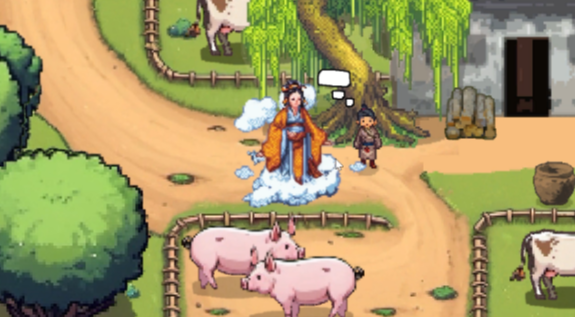
The art direction centered on creating an immersive 2D top-down aesthetic. Menu backgrounds were crafted using AI-generated compositions refined manually, while in-game maps and props featured custom-made pixelated assets tailored to the fixed-perspective style. Hand-drawn animations, created in Procreate, added a dynamic touch to characters and actions. Our asset creation followed a structured process: sketching concepts for white-box testing, leveraging real-world references or AI tools for initial designs, and then manually refining them for polish and consistency.
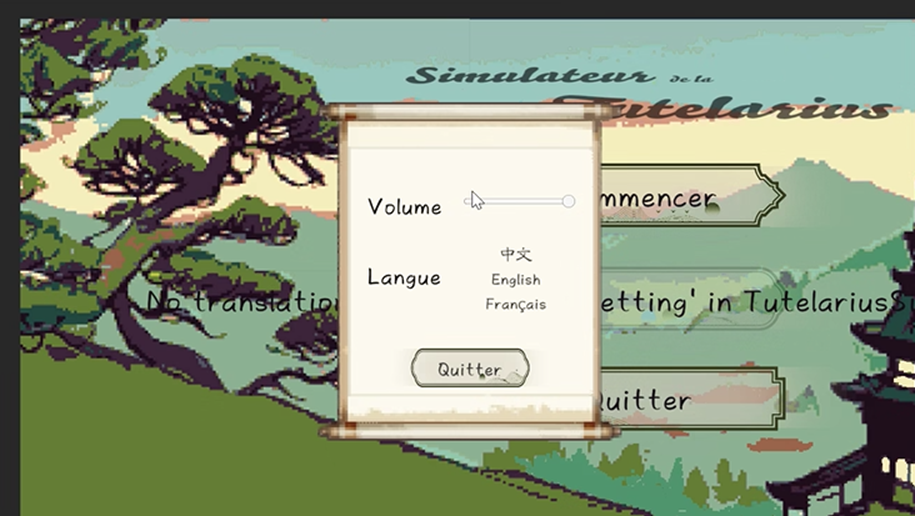
On the technical side, our engineering and programming efforts handled core mechanics such as movement, animation, and dynamic camera controls using Unity. Localization was a significant focus, supported by Unity’s Localization Package. This enabled us to implement multilingual gameplay, including complex CCJK languages, through the creation of Locale files, String Table Collections, and robust font compatibility. Key steps included adding Localize String Event components to text elements, enabling dynamic updates for language selection, and externalizing strings for efficient translation workflows.
Localization Efforts: Reaching a Broader Audience
One aspect of our project that added depth and complexity was localizing the game into French and English from the original Chinese. This effort allowed us to reach a broader audience and demonstrate the global potential of our game. As the producer, I coordinated the localization process, ensuring that translations were accurate and culturally appropriate while maintaining the game’s tone and style.
Delivery and Lessons Learned
Beyond the satisfaction of completing the project, I walked away with several valuable lessons:
- Clear Communication Is Key: Regular updates and honest conversations kept us aligned and efficient.
- Scope Management: Staying disciplined about our game’s scope was critical to finishing on time and delivering quality.
- Localization Matters: Making the game accessible to a broader audience through thoughtful localization enhanced its reach and impact.
- Unity’s Power: The platform’s versatility and resources enabled us to bring our vision to life without overwhelming technical challenges.
Final Thoughts
Producing a game with a small team is a deeply collaborative and creative endeavor. It requires balancing vision with practicality, nurturing team dynamics, and staying adaptable in the face of challenges. Using Unity as our development tool gave us the flexibility and efficiency we needed to focus on what truly mattered: creating a game that we could be proud of.
One of the most rewarding aspects of this project was seeing how our skills complemented each other. My teammates brought technical and artistic expertise, while I provided the structure and coordination needed to keep everything aligned. When disagreements arose, we resolved them through open discussions, always prioritizing what was best for the game.
To anyone considering embarking on a similar journey, my advice is simple: Start small, communicate often, and trust in your team’s abilities. The experience of bringing a game to life—no matter the scale—is one of the most rewarding challenges you can take on as a game producer.